Carbon Fittings · DN700-DN1200
EN 10253-2 - Ready for delivery
Fittings in extra-large sizes. Full compliance with standards and traceable documentation.
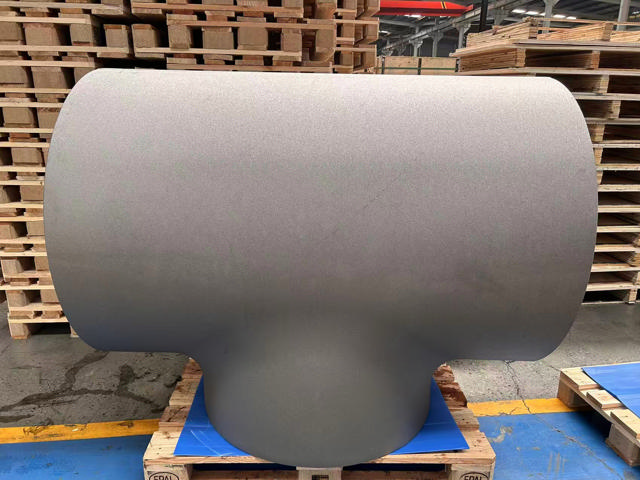
THE PROBLEM
"EN" or "Similar to EN"? The difference isn't just marketing.
In the market for large carbon fittings (DN700–DN1200), two fundamentally different products are sold under nearly identical names. On the packaging and the invoice, they appear similar. In terms of pressure calculations and certification, however, they are not.
CONSTRUCTION
Same function. Different construction.
The inner corner, known as the “crotch radius,” is the point in a fitting that bears the heaviest load. This is where the difference lies.
✕ Similar to EN
Made from plates
Segment-welded construction

✕ Multiple weld seams
✕ Branch welded on separately
✕ Weld seam in the load-bearing zone
✕ Sharp inside corner
3–4 x Stress concentration at the crotch point
✓ EN 10253-2
Formed from a single tube
Thermoformed, seamless body

✓ Single-piece construction, max. one longitudinal weld
✓ Branch pulled out of the tube
✓ Natural crotch radius — no seam
✓ Smooth transition in the stress zone
1.5–2x stress concentration at the crotch point
RESPONSIBILITY FOR CALCULATIONS
Who is responsible?
The pressure factors and calculation methods specified in this standard are documented for EN 10253-2 products. If you choose an alternative, the responsibility falls on you.
“Other shapes of reducers and tees exist on the market. They do not comply with the calculation procedures specified in this standard. Therefore, the user is responsible for the calculation, design, and application.”
Other shapes are available on the market, but the standard’s calculation methods do not apply to them. The user bears sole responsibility.
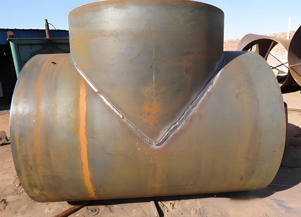
Similar to EN
The standard's load factors do not apply. You must calculate the strength, determine the wall thickness, and document the durability yourself—often using FEA or your own engineering calculations.
RESPONSIBILITY FOR CALCULATIONS: YOU
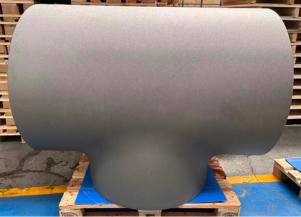
EN 10253-2
Pressure factors documented in Annexes C and D. Wall thickness calculated in accordance with Annex B. MTC 3.1 covers the entire basis for calculation.
RESPONSIBILITY FOR CALCULATIONS: THE STANDARD
SORTIMENT
Three products. One set of standards.
INDURA now supplies carbon fittings in sizes DN700–DN1200 in accordance with EN 10253-2. All products are hot-formed, traceable to the steel mill, and come with an MTC 3.1 certificate as standard.
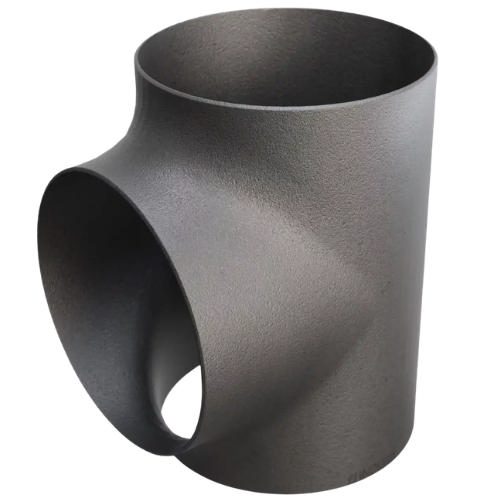
Tee
EN 10253-2
Dimensions: DN700–DN1200
Type: Type A
Material: P235GH-TC1 1.0345
Thickness: 7.1 – 12.5 (7.1 · 8 · 10 · 12.5)
Certification: MTC 3.1
Impact tested: Temperature: 0°C
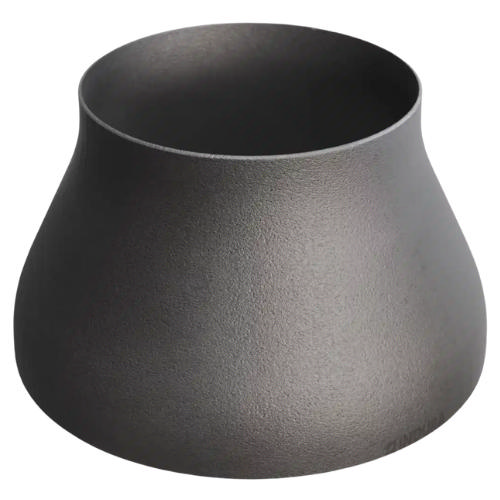
Concentric Reducer
EN 10253-2
Dimensions: DN700 × DN500 — DN1200 × DN1000
Type: Type A (standard)
Reducer:
1219 - 813
1016 - 813
914-711
800-610
711-406
Material: P235GH-TC1 1.0345
Thickness: 7.1 – 12.5 (7.1 · 8 · 10 · 12.5)
Certification: MTC 3.1
Impact tested: Temperature: 0°C
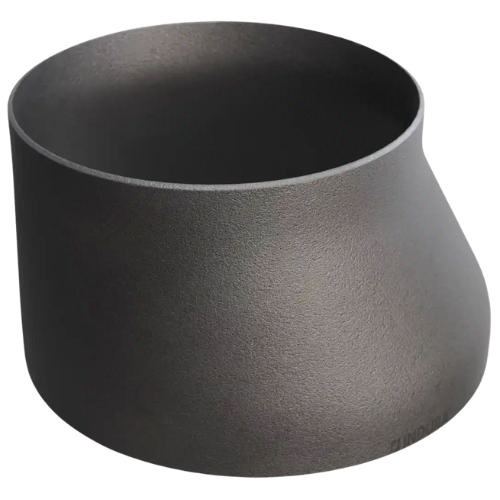
Eccentric Reducer
EN 10253-2
Dimensions: DN700×DN500 – DN1200×DN1000
Type: Type A (standard)
Reducer:
1016 - 813
914 - 711
813 - 610
711 - 406
Material: P235GH-TC1 1.0345
Thickness: 7.1 – 12.5 (7.1 · 8 · 10 · 12.5)
Certification: MTC 3.1
Impact tested: Temperature: 0°C
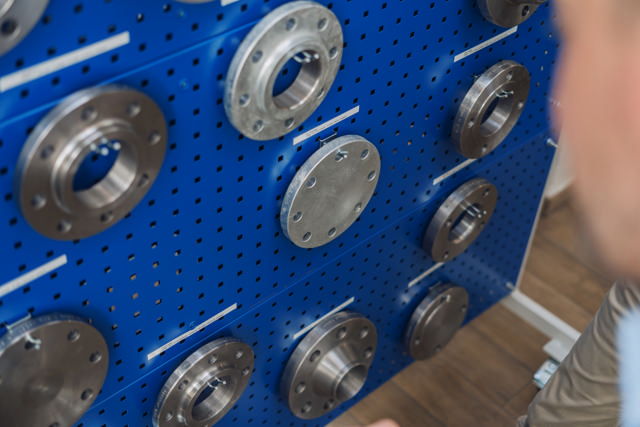
INDURA as a partner
We work with fittings, flanges, and weld collars every day—including sizes and materials that are out of the ordinary. Our role isn’t just to deliver, but to make it easy for you to move forward with your project.
We provide documentation, offer advice on customizations, and focus on what needs to work in the real world.